- The Product Model
- Posts
- The Product Model #292 - When AI Blurs Roles, Teams Need Better Ways of Working
The Product Model #292 - When AI Blurs Roles, Teams Need Better Ways of Working
This Week’s Updates: Claude Code, Vibe Coding, the Design Engineering Gap, and more...

Rory Madden
May 12, 2026

This Week’s Updates
Enabling the Team
Will Claude Code Ruin Our Team? by Justin Jackson
AI coding is collapsing role boundaries across design, product, and engineering, so teams need new ways of collaborating that preserve shared judgment and respect instead of letting tool access turn cross-functional work into turf war chaos.
How To Manage An Insecure Leader by Jeffrey Yip and Dritjon Gruda
Senior roles become unsustainable when expectations, scope, and availability keep expanding without being reset. Redesigning the job around clearer boundaries, better support, and more realistic priorities can help leaders stay effective without sacrificing their wellbeing.
Product Direction
Concepts I Use Every Day: BAPO by Jason Yip
BAPO argues that business and product strategy should drive architecture, ways of working and org structure, helping teams avoid inside out decisions where existing structure quietly limits what product strategy is allowed to be.
Stakeholder Management For Product Teams: Show Your Work, Don't Sell Your Conclusions by Teresa Torres
Stakeholder management works better when teams show how they reached a decision instead of defending a recommendation at the end. Sharing outcomes, opportunities, and test results as the work unfolds helps stakeholders contribute earlier, reduces opinion battles, and keeps discovery focused on solving the right problem.
Continuous Research
Accelerating Learning Velocity In Product Development | Sponsored Content (Capital One) by Jen Cardello
Research creates more value when teams use it to answer clear decision-making questions, not to slow work down or create the appearance of rigor. Standardising what you need to learn, using existing data where possible, and matching the method to the problem can help teams learn faster and ship with more confidence.
UX Questionnaires. Is It Rocket Science? by Maxim Kich
Design decisions get stronger when teams test them with structured user feedback instead of relying on instinct alone. Questionnaires can help quantify whether a flow, layout, or interaction is working, making it easier to validate assumptions before treating them as truth.
Continuous Design
Design Careers In The Age Of AI: Specialize Or Generalize? by Matheus Cervo
AI can help designers work across disciplines, but relying on it to replace real expertise can lead to weaker judgment and more generic output. The better use is to deepen specialist strengths while building enough understanding of adjacent areas to collaborate better and innovate with more confidence.
From Mockups To Momentum: How Vibe Coding Is Changing The Design Process by Jamie Stamer
Vibe coding shifts prototyping from static mockups to living behaviour, helping designers, engineers, and product teams surface edge cases, trade-offs, and AI uncertainty earlier, when learning is cheaper, and alignment is still easy to change.
Continuous Development
Design And Engineering, As One by Matthias Ott
We inherited our product processes from a 19th-century steelworks. Frederick Winslow Taylor separated thinking from doing, managers from makers, designers from builders – and a hundred years later, most digital product teams are still running on that model. The gap between design and engineering isn’t an accident. It was designed in. And it can be designed out.
Design Docs Considered Harmful by Lucas Fernandes da Costa
Teams learn more from a small prototype and a clear one-pager than from a long design doc written before the real constraints are known. Focus early writing on the problem, system boundaries, and hard-to-reverse decisions, then use implementation to discover the details instead of pretending they can all be known upfront.
Seen an interesting article online? Share it with us, and we might feature it in our next issue!
Click here to share an article

The Team Behind The Conference
Do You Know The Team Behind UXDX?
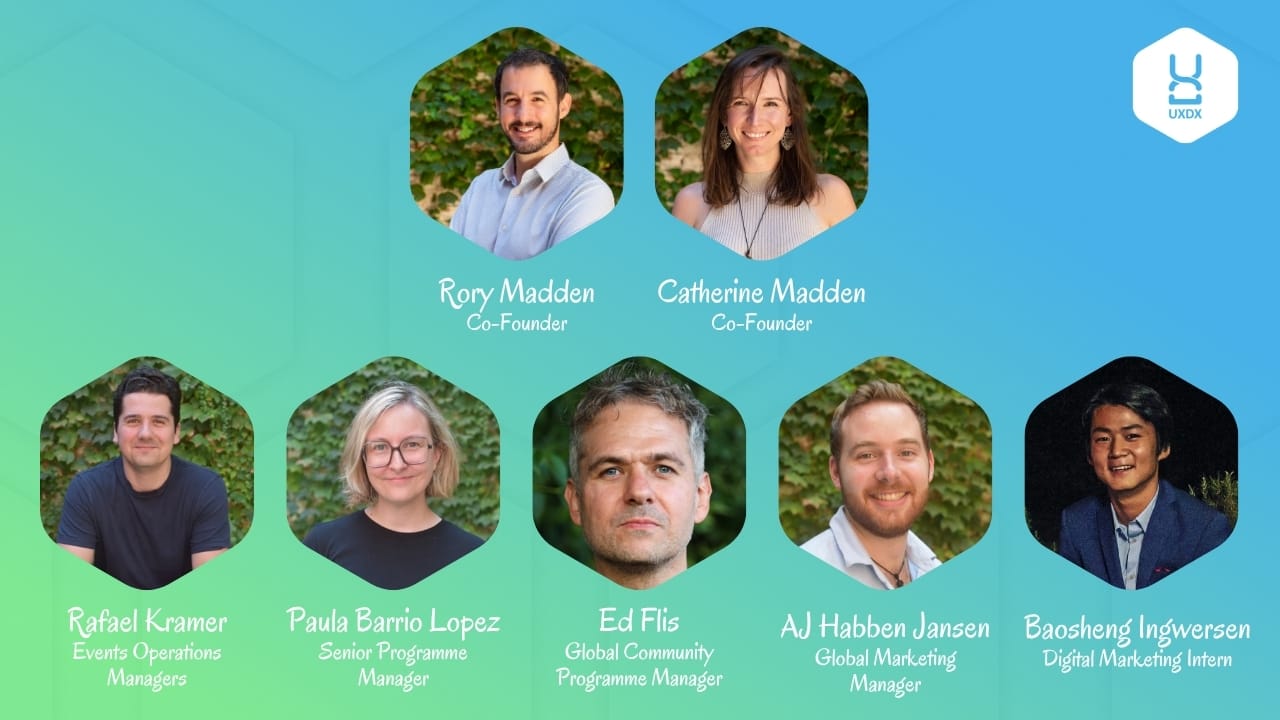
UXDX USA is happening right now, and UXDX EMEA is just two weeks away, so it feels like a good moment to introduce the small team behind the scenes. UXDX is built by a team focused on helping companies improve how they work so they can build better products with happier teams. Catherine and Rory lead the vision, Paula shapes the programme and speaker experience, Rafael keeps event operations moving, Ed grows the global community, and Arjan & Baosheng take care of the brand and communications.
If you’re at the event, come and say hello. Speak to Paula if you’re interested in speaking at UXDX, Ed if you’d like to bring UXDX to your city as a community ambassador, or anyone on the team if you just want to learn more about what we’re building!
UXDX EMEA
27 - 29 May, 2026, Berlin

10% Discount: 10NEWSLETTEREMEA26
FREE COMMUNITY EVENTS
IN-PERSON 21 May: Warsaw 21 May: Edinburgh 28 May: Seattle 9 Jun: Glasgow 9 Jun: Milan 🔔 Want a UXDX Community event in your city? or, alternatively, if your company wants to host an in-person event, please reply and let us know. | ONLINE |
Video Of The Week
Driving Transformational Business Results:
The Role of Design Across the Org
Throwback to one of the most discussed talks of UXDX USA 2025! Unpack Daniela's perspectives on building world-class design organizations at some of the world's most iconic brands. Dive into how design at Capital One is helping drive meaningful value for the company and its 100+ million customers, and her thoughts on aligning design initiatives with broader organizational strategies.
The session also explored how design collaborates with business-critical functions to ensure a cohesive approach to product development and organizational growth that is customer-backed and grounded in business priorities. Watch the full session below:
Want to go into how careers and leadership are shifting as AI compresses the ladder? My ebook Managing Your Career In The Age Of AI explores how to build judgment, relationships, and influence in a world that keeps trying to automate the surface of the work.