- The Product Model
- Posts
- The Product Model #293 - From AI Hype To AI Quality
The Product Model #293 - From AI Hype To AI Quality
This Week’s Updates: Organizational Silos, Strategy Trap, AI Super User, Hidden Costs Of AI Prototypes, Building AI Agents and more...

Rory Madden
May 19, 2026

This Week’s Updates
Enabling the Team
Organizational Silos: What The Titanic Teaches Us About Information That Never Arrives by Joost Minnaar
Silos are usually created by structure, not bad intent, when teams optimize for local metrics instead of shared outcomes. Shorter paths between signals and decisions, more transparency, and cross-functional ownership help important information reach the right people before delays turn into bigger problems.
Technical Leaders Make These 3 Common Storytelling Mistakes by Wes Kao
Technical leaders lose people when they overload stories with details, backstory, and caveats instead of making the point clear first. Simpler stories, shorter examples, and a stronger hook make it easier to hold attention, build buy-in, and share the deeper details only when they are needed.
Product Direction
The “Be More Strategic” Trap by Stephanie Leue
Telling someone to “be more strategic” is not helpful unless teams make clearer what strategic thinking actually looks like in practice. People create more impact when they connect initiatives to business context, explain work in terms leaders care about, and are given the space to think beyond immediate delivery.
You Don’t Need Another Prioritization Framework: Just These 4 Components by Ant Murphy
Prioritization works better when teams stop searching for one perfect framework and start judging work through impact, effort, urgency, and confidence. The better decisions come from linking choices to goals, revisiting time-sensitive opportunities, and being honest about what you still do not know.
Continuous Research
From Gatekeepers To Enablers: The UX Researcher's New Role In 2026 | Sponsored Content by Optimal
Research creates more value when teams use it to answer clear decision-making questions, not to slow work down or create the appearance of rigor. Standardising what you need to learn, using existing data where possible, and matching the method to the problem can help teams learn faster and ship with more confidence.
How To Become An AI Super User: Your Complete Guide | Sponsored Content (Dovetail) by Emily Brogan & Peter Wooden
Teams get more value from AI when they treat it as support, not a replacement. Build enough hands-on experience to develop good judgment, use AI to speed up research and execution, and keep humans responsible for quality, decisions, and catching where the output falls short.
Continuous Design
What Design Leaders Must Unlearn To Lead In An AI-first World by Arin Bhowmick
AI adoption is not just about giving teams new tools. Design leaders need to strengthen fundamentals, blur rigid role boundaries where needed, and treat trust, clarity, and reliability as part of quality, so that faster work does not lead to weaker decisions.
The Hidden Cost Of AI Prototypes That Are Made To Die by Allie Paschal
AI prototypes save time early, but they create extra work later when teams cannot extend, hand off, or reuse what they have made. Choose prototyping tools based on whether the output needs to validate an idea quickly or carry forward into real product development.
Continuous Development
What We Wish We Knew About Building AI Agents by Ian Vanagas
AI agents create more value when teams start with the simplest useful architecture, give the system strong product context, and treat observability and evals as core product infrastructure from day one. Better adoption comes from reliability, transparency, and solving real user problems, not from piling on more agent capabilities.
Software Engineering Calories: What Would Cal.ai Say About Your Product? by Anton Zaides
Teams make better delivery decisions when they measure the real weight of what they are shipping, not just count PRs or assume more code means more progress. Tracking input more honestly can help uncover bottlenecks, surface wasted effort, and show when the better move is not to build more, but to improve adoption or remove features.
Seen an interesting article online? Share it with us, and we might feature it in our next issue!
Click here to share an article

NEW: UXDX San Francisco 2026
We are expanding to the West Coast!
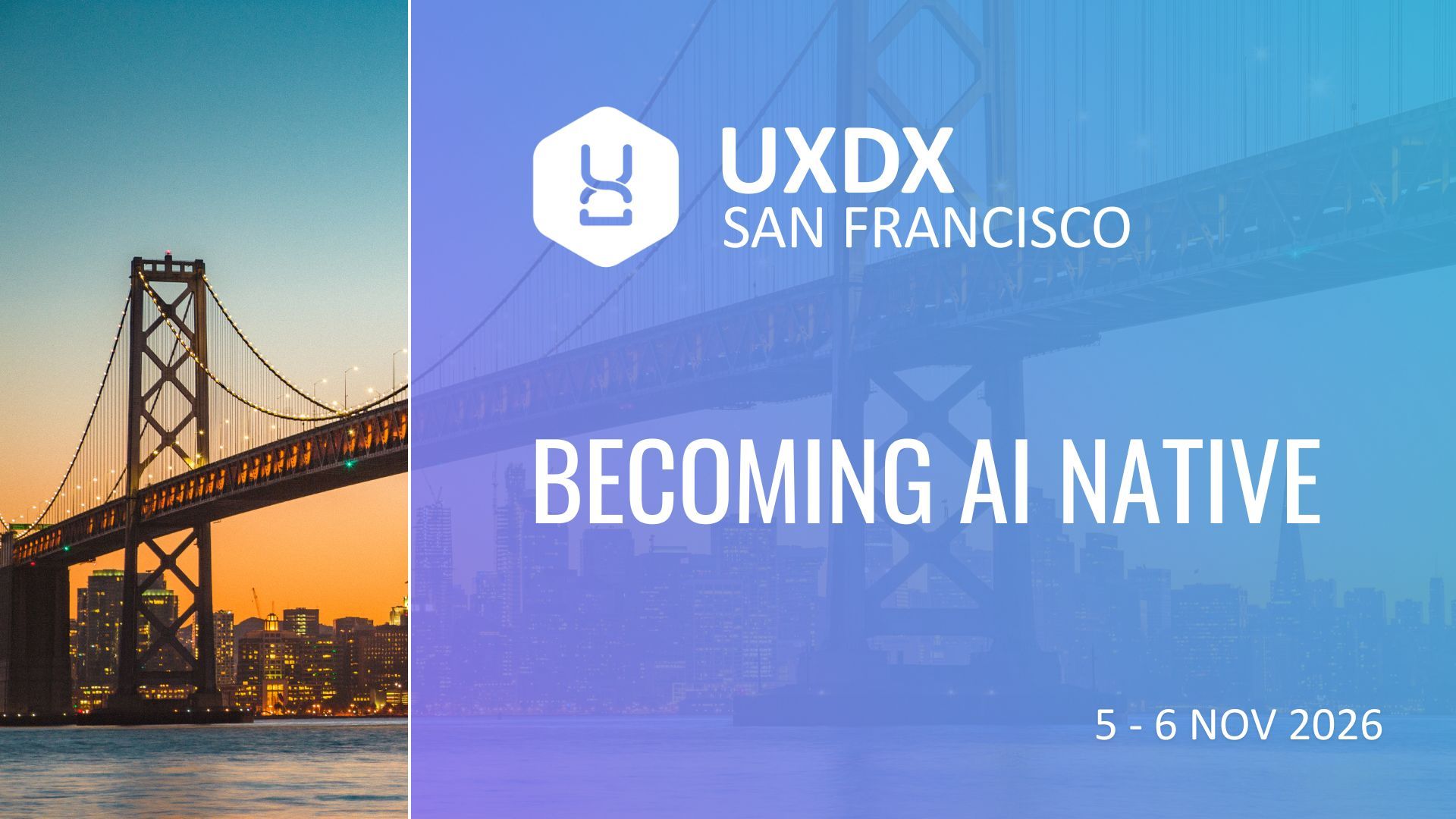
UXDX is heading to the West Coast. We announced it on stage last week at UXDX USA in New York, and now the newsletter community gets the first look: UXDX San Francisco 2026 is happening on 5–6 November. The sessions are around Becoming AI Native, focused on how product, design, research, and engineering teams move beyond AI experiments and start rebuilding the way they work.
The first speakers are already live on the website, and tickets are now available. If you want to be part of the first UXDX San Francisco event, you can check out the agenda and secure your spot here: https://uxdx.com/sanfran/2026/
UXDX EMEA 2026 | UXDX San Francisco 2026 |

FREE COMMUNITY EVENTS
IN-PERSON 21 May: Warsaw 21 May: Edinburgh 28 May: Seattle 9 Jun: Glasgow 9 Jun: Milan 11 Jun: Barcelona 🔔 Want a UXDX Community event in your city? or, alternatively, if your company wants to host an in-person event, please reply and let us know. | ONLINE |
Video Of The Week
How to Build an AI-Powered Product Development Process
This week, we’re resharing one of the most-watched sessions from UXDX USA 2025. Anthony Maggio, Head of Product at Airtable, shows how his team is using AI across the product development process, from interpreting user feedback at scale to improving strategic alignment and accelerating roadmap decisions.
The session gives a practical look at how AI can help teams turn complex data into clearer product choices, keep plans connected to business goals, and respond faster to changing customer needs. If you’re exploring how AI can move from isolated experiments into the operating rhythm of product management, this talk is well worth watching:
Want to go into how careers and leadership are shifting as AI compresses the ladder? My ebook Managing Your Career In The Age Of AI explores how to build judgment, relationships, and influence in a world that keeps trying to automate the surface of the work.